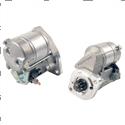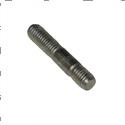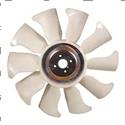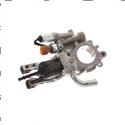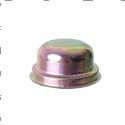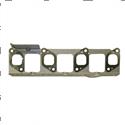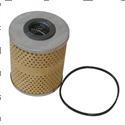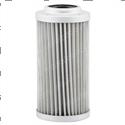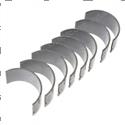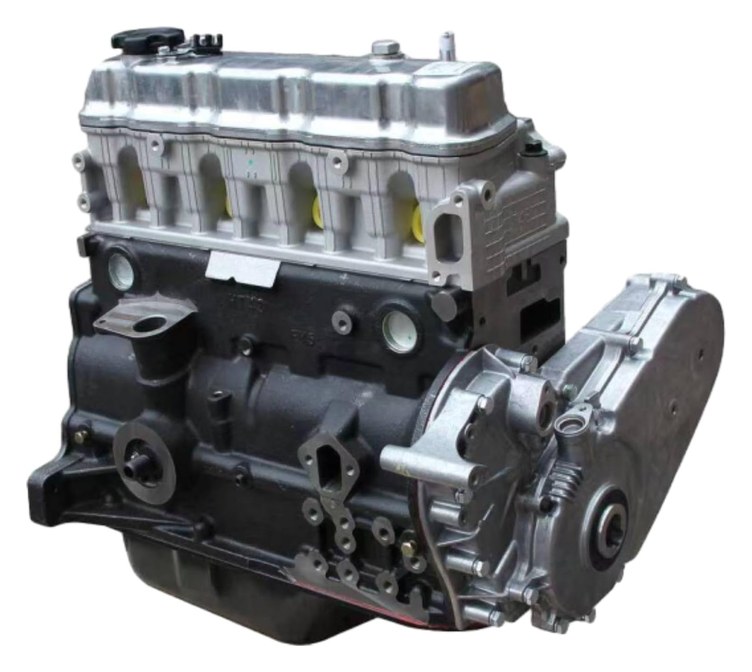
Nissan's H20, H20-II, H25, K21 and K25 power industrial equipment under many different OEM badges. The H-series is an iron pushrod design with a timing chain; the K-series is an aluminum-head overhead cam with a timing belt. The two families share essentially no parts, and matching displacement — H25 versus K25 — is not a cross-reference. A magnet on the cylinder head tells you which family you have.
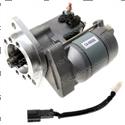
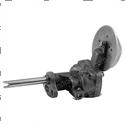
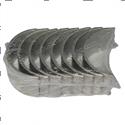
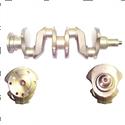
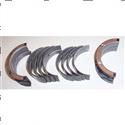
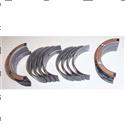
The K21 and K25 are four-cylinder industrial engines sharing an 89 mm bore and differing in stroke, at 2,065 cc and 2,488 cc. Both use an overhead-valve pushrod valvetrain with a rocker shaft and screw adjusters, a bathtub combustion chamber, a timing chain, five main bearings and a chain-driven side power take-off. Both run gasoline or LPG.
Routine service on a K21 or K25 covers valve clearance set hot at 0.38 mm on every valve, a cold retighten of the head bolts and manifold nuts, belt deflection, oil and filter, plugs, air and fuel filters and coolant. Most running complaints trace back to compression, ignition or fuel, and a compression test separates them quickly.
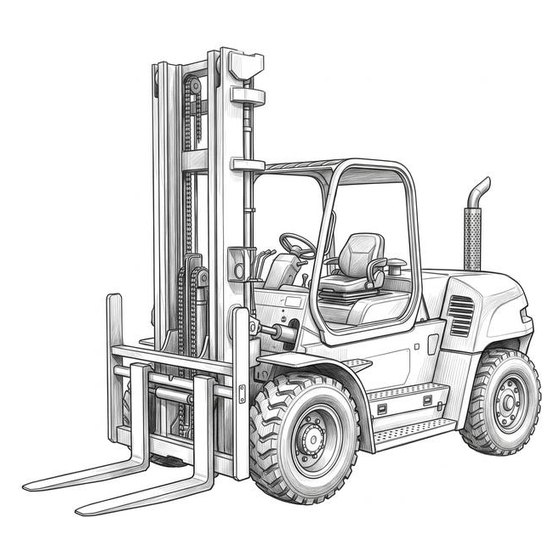
Every powered industrial truck falls into one of seven OSHA classes, sorted by power source, tire type and how the operator works the machine. Classes I–III are electric, IV and V are internal combustion on cushion and pneumatic tires, VI covers tractors and tow vehicles, and VII is rough terrain. The class tells you where a truck can run and which parts it consumes.
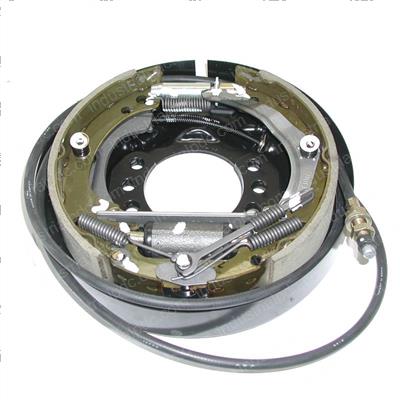
Most internal combustion forklifts stop on drum brakes at the drive axle: one master cylinder feeding a wheel cylinder at each end, spreading two shoes against a drum. The shoes self-adjust, but on most designs only when the truck brakes in reverse. Three quarters of brake complaints come down to contaminated linings or adjustment, not worn parts.