
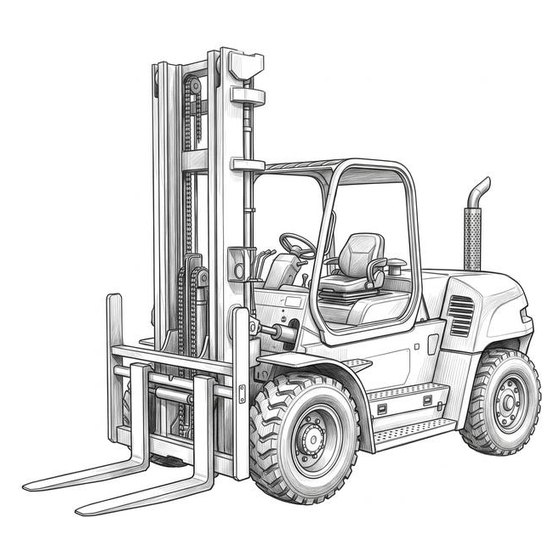
Class I — Electric Motor Rider Trucks
Battery-powered counterbalanced trucks the operator rides. The two body styles are sit-down and stand-up, and both carry the load out in front of the front axle with counterweight at the rear.
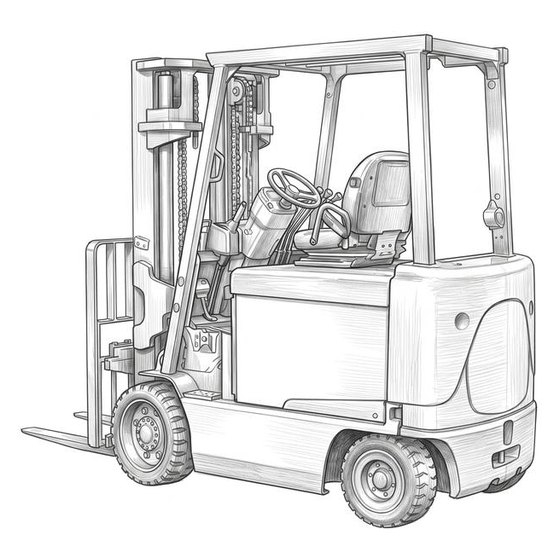

These are the indoor workhorses of clean, hard-floor operations — food, pharmaceutical, retail distribution, anywhere exhaust is a problem. Because they are counterbalanced, they need no outriggers and can drive straight up to a pallet on the floor or in a rack.
Stand-up models trade seat comfort for a smaller footprint and faster on-and-off cycles, which is why they dominate dock work and high-frequency picking.
- Power
- Industrial battery — lead-acid or lithium
- Tires
- Cushion or pneumatic
- Environment
- Indoor, improved surfaces
- Load handling
- Counterbalanced, no straddle
No engine and no outriggers. Look for the battery compartment under the seat or behind the operator, and a charger receptacle on the cowl.
Traction and hydraulic motors, contactors and controllers, drive units, brake assemblies, mast chains and rollers, battery cables and connectors, forks.
Class II — Electric Motor Narrow Aisle Trucks
Battery-powered trucks built to work in aisles far too tight for a counterbalanced truck. Reach trucks, order pickers, turret trucks and straddle trucks all live here.

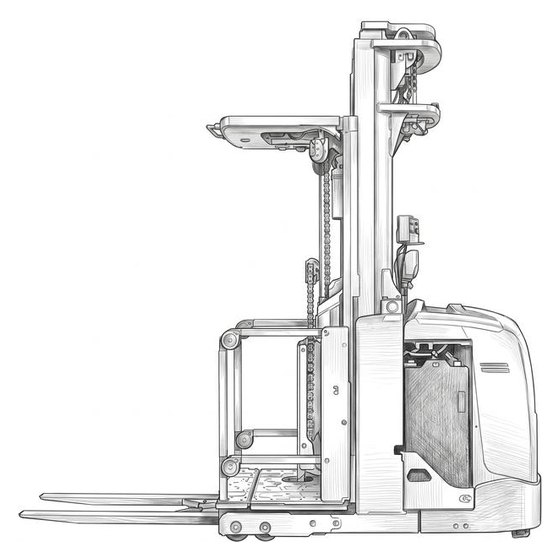
Instead of counterweight, these trucks use straddle legs or outriggers that run under the pallet, putting the load inside the wheelbase. That is what lets the aisle shrink. A reach truck adds a pantograph or a traveling mast so the forks can extend into the rack while the chassis stays in the aisle.
Order pickers work differently again: the operator platform rises with the forks so picking happens at height. Any truck that elevates the operator brings fall protection into the conversation — harness, lanyard and anchor point are part of the machine, not accessories.
- Power
- Industrial battery
- Tires
- Polyurethane load and drive wheels
- Environment
- Indoor, narrow aisle racking
- Load handling
- Straddle or outrigger, often reaching
Straddle legs or outriggers at floor level running forward under the load, and in many cases an operator platform that travels up the mast.
Mast chains and rollers, reach carriage and pantograph components, load wheels, polyurethane tires, lift and tilt cylinders and seals, platform safety hardware.
Class III — Electric Motor Hand Trucks and Hand/Rider Trucks
Battery-powered trucks steered by a tiller handle rather than a steering wheel. The operator walks with the truck, or rides a platform on the larger models.

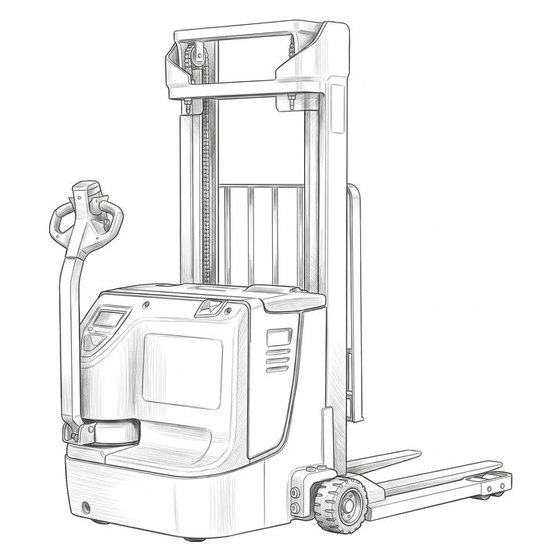

This is the largest and most varied class by unit count. It runs from a basic electric pallet truck that only lifts a pallet clear of the floor, up through walkie stackers with a full mast, to rider pallet trucks used for long-haul horizontal transport and case picking.
The defining feature is the control head, not whether the operator rides. Both hand trucks and hand/rider trucks sit in Class III because both are tiller-steered, with the controls, horn, belly button reverse and brake all in the handle.
- Power
- Industrial battery
- Tires
- Polyurethane load and drive wheels
- Environment
- Indoor, docks, trailer loading
- Load handling
- Forks at floor level, or short mast on stackers
A tiller handle instead of a steering wheel. Most have no overhead guard. Stackers add a mast; pallet trucks do not.
Load wheels and drive wheels, tiller handle and control head assemblies, switches and horns, gearboxes, electromagnetic brakes, forks, casters and entry rollers.
Class IV — Internal Combustion Engine Trucks — Cushion Tire
Engine-powered counterbalanced trucks riding on solid cushion tires pressed onto steel wheels. Built for smooth, improved surfaces.
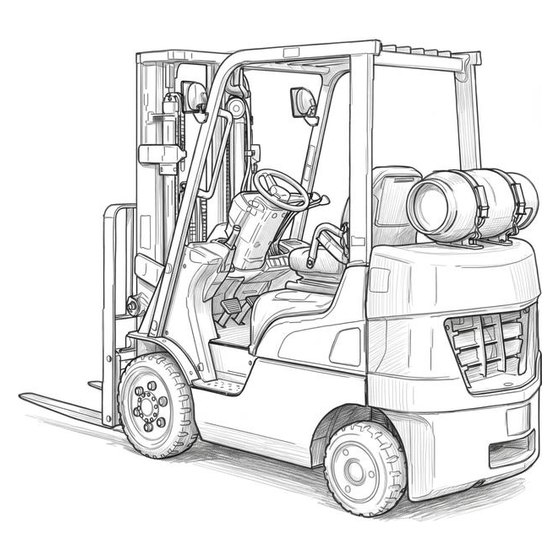
Cushion tire trucks sit lower and turn tighter than their pneumatic counterparts, which makes them the standard choice for indoor warehousing, dock work and trailer loading where the floor is good. LPG is the most common fuel because it burns clean enough for indoor use with adequate ventilation, though gasoline, dual fuel and diesel all appear.
The tradeoff is surface tolerance. A cushion tire has no air and very little sidewall, so it transmits everything the floor does — broken concrete, gravel and dock plates punish both the tire and the truck.
- Power
- LPG, gasoline, dual fuel or diesel
- Tires
- Press-on solid cushion
- Environment
- Indoor and improved outdoor surfaces
- Load handling
- Counterbalanced
An engine plus low-profile solid tires — no tread depth and no valve stem. On LPG trucks the tank sits horizontally across the counterweight.
Engine components — starters, alternators, water pumps, filters, ignition, LPG regulators and mixers — plus transmissions, brakes, press-on tires, mast chains and rollers.
Class V — Internal Combustion Engine Trucks — Pneumatic Tire
Engine-powered counterbalanced trucks on pneumatic tires, built to work outside on surfaces a cushion tire truck cannot handle.
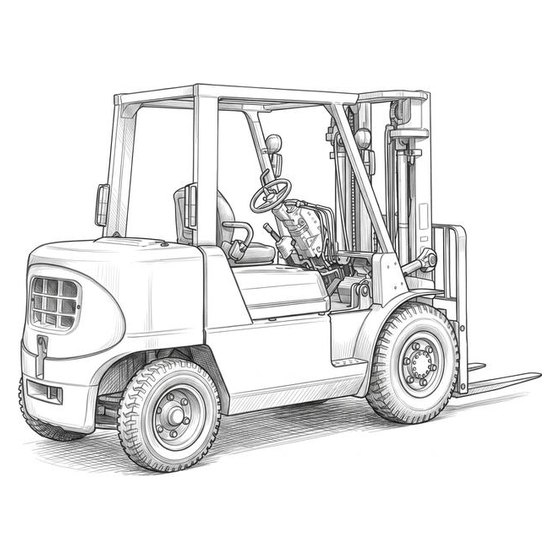
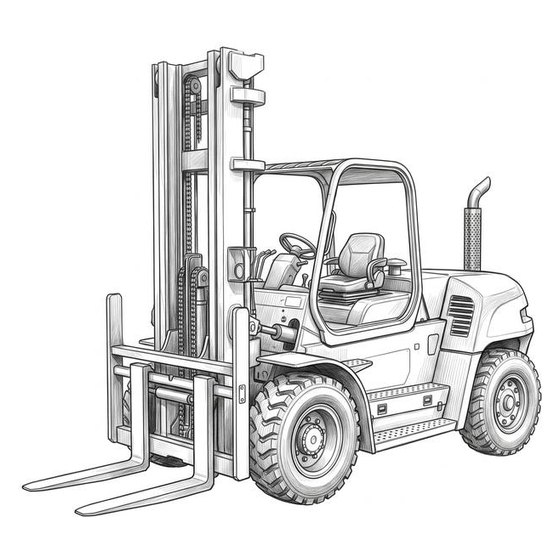
The extra ground clearance, larger tire footprint and heavier axles let these trucks operate on gravel, packed dirt, broken asphalt and lumber yards. Capacity range is enormous — this class covers everything from a modest yard truck up to container handlers lifting many times that.
One point that trips people up: "pneumatic" in this class covers both air-filled and solid pneumatic tires. A solid pneumatic has the same profile and mounts on the same rim, it just cannot go flat. The class is defined by tire type and profile, not by whether there is air in it.
- Power
- Diesel, LPG or gasoline
- Tires
- Air pneumatic or solid pneumatic
- Environment
- Outdoor yards, unimproved surfaces
- Load handling
- Counterbalanced
An engine plus deep-tread tires with real sidewall on a wide track, and noticeably more ground clearance than a cushion tire truck.
The same engine and drivetrain families as Class IV, plus heavier axles and differentials, larger masts and carriages, pneumatic tires, tubes and rims.
Class VI — Electric and Internal Combustion Engine Tractors
Tow tractors, tuggers and burden carriers. These machines pull loads rather than lifting them, and they are the one class with no mast and no forks.
No drawing available for this class in the current set.
Tractors move material by towing carts in trains, which is far more efficient than shuttling single pallets when the distances are long. They are common in manufacturing plants running line-side delivery, in large distribution centers, and across airport ramps handling baggage and freight.
Both battery and engine versions sit in this class. What defines it is the job — drawbar pull instead of lift capacity.
- Power
- Battery or combustion engine
- Tires
- Cushion or pneumatic
- Environment
- Plants, warehouses, airport ramps
- Load handling
- Towing only — hitch, not forks
No mast and no forks. Look for a hitch, pintle or drawbar at the rear and a rated drawbar pull instead of a lift capacity.
Drivetrain components, hitches and couplers, brakes, controllers, seats and operator controls, tires.
Class VII — Rough Terrain Forklift Trucks
Purpose-built trucks for unimproved ground — construction sites, lumber yards, agriculture. Both vertical mast rough terrain trucks and telehandlers sit in this class.
No drawing available for this class in the current set.
Large flotation tires, high ground clearance and frequently four-wheel drive let these machines work on mud, slopes and rubble that would strand any warehouse truck. Many add outriggers and frame leveling so the mast can be brought to vertical on uneven ground.
Telehandlers belong here too, and they change the geometry entirely. An extending boom means capacity falls as the load moves forward and up, so the load chart — not a single rated capacity — governs what the machine can safely lift.
- Power
- Diesel, typically
- Tires
- Large flotation pneumatic, deep lug
- Environment
- Construction, lumber, agriculture
- Load handling
- Vertical mast or extending boom
High ground clearance and aggressive lug tread. A telescoping boom in place of a vertical mast means telehandler.
Boom wear pads and extension cylinders, axles and differentials, hydraulic cylinders and hoses, outrigger components, tires.
The one that isn't a class

A manual hand pallet jack has no class, because the classification system covers powered industrial trucks and this one is powered by whoever is pulling it. It sits outside the seven classes entirely, and outside the operator certification requirements that come with them.
That does not make it maintenance-free. Pump seals, load wheels, steer wheels, handle assemblies, release levers and axle pins all wear, and a jack that will not hold a load or will not lower under control is a hazard in its own right.
Class is not the same as type
Two designations get confused constantly. The class is the seven-part grouping above. The type designation — codes such as G, LP, D, E, ES, EE and EX — describes how a truck is built for hazardous atmospheres, and it is stamped on the data plate. A truck approved for one location may be prohibited in another regardless of class, so check the type designation against the location before assigning a truck to it.
Operator certification is also narrower than most people assume. Authorization is tied to the equipment an operator was evaluated on, so someone trained on a Class IV sit-down truck is not automatically cleared to run a Class II reach truck. Different class, different controls, different training.
This guide is a general overview of how the classes are organized. For requirements that apply to your equipment and site, work from the current regulation text and the manufacturer's operator and service manuals.